According to the International Association of Oral Medicine and Toxicology (IAOMT), an organization that campaigns against the use of added fluoride, it may also contribute to the following health problems:
acne and other skin problems
cardiovascular problems, including arteriosclerosis and arterial calcification, high blood pressure, myocardial damage, cardiac insufficiency, and heart failure
reproductive issues, such as lower fertility and early puberty in girls
thyroid dysfunction
conditions affecting the joints and bones, such as osteoarthritis, bone cancer, and temporomandibular joint disorder (TMJ)
neurological problems, possibly leading to ADHD
One review describes fluoride as an “extreme electron scavenger” with an “insatiable appetite for calcium.” The researchers call for the balance of risks and benefits to be reconsidered.
Fluoride poisoning
Acute, high-level exposure to fluoride can lead to:
abdominal pain
excessive saliva
nausea and vomiting
seizures and muscle spasms
This will not result from drinking tap water. It is only likely to happen in cases of accidental contamination of drinking water, due, for example to an industrial fire or explosion.
It is worth remembering that many substances are harmful in large quantities but helpful in small amounts.
Uses
Fluoride exists in many water supplies, and it is added to drinking water in many countries.

Fluoride is added to many dental products.
It is also used in the following dental products:
toothpaste
cements and fillings
gels and mouthwashes
varnishes
some brands of floss
fluoride supplements, recommended in areas where water is not fluoridated
Non-dental sources of fluoride include:
drugs containing per fluorinated compounds
food and beverages made with water that contains fluoride
pesticides
waterproof and stain-resistant items with PFCs
Excess fluoride exposure may come from:
public water fluoridation
high concentrations of fluoride in natural fresh water
fluoridated mouth rinse or toothpaste
untested bottled water
inappropriate use of fluoride supplements
some foods
Not all fluoride exposure is due to adding the chemical to water and dental products.
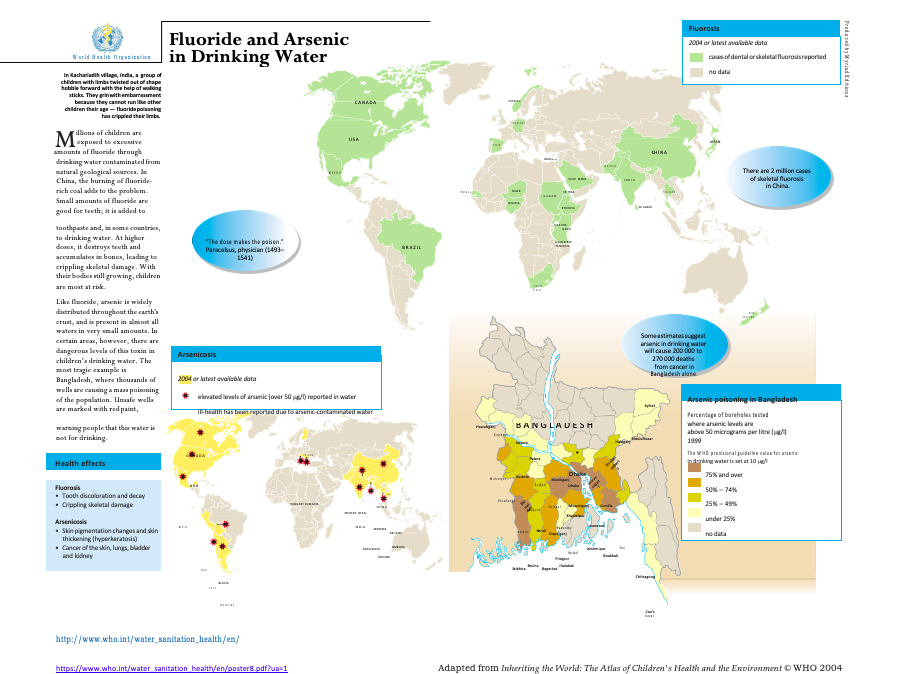
Some geographical areas have drinking water that is naturally high in fluoride, for example, southern Asia, the eastern Mediterranean, and Africa.
Side effects
Possible side effects of excessive fluoride intake include:
discoloration of teeth
bone problems
Other possible side effects are listed under the “risks” section above.